

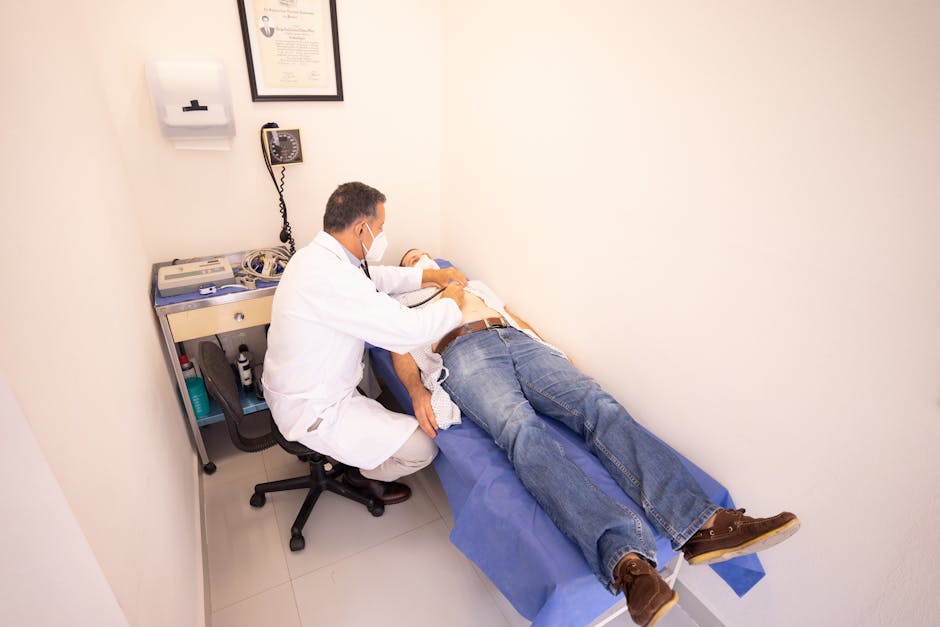
Living with chronic digestive issues can be incredibly challenging, often leaving you searching for answers and relief. You might be experiencing persistent abdominal pain, frequent diarrhea, or unexplained weight loss, wondering what’s truly going on inside your body. It’s a frustrating experience when symptoms disrupt daily life, making simple activities feel like monumental tasks.
Many patients feel well until a condition has advanced, making routine evaluation an essential part of prevention. Understanding the nuances of conditions like inflammatory bowel disease (IBD) is the first step toward finding effective management. Here at BioSyntrx Medical Center, we’re dedicated to providing accurate diagnosis and patient-centered care for complex gastrointestinal disorders, helping you navigate your health journey with clear communication and support. If you’ve been grappling with digestive discomfort, you might find our insights on IBS symptoms and irritable bowel syndrome: dietary management particularly helpful, as it touches on related functional gut issues.
What is Inflammatory Bowel Disease (IBD)? Understanding Crohn’s and Ulcerative Colitis
Inflammatory Bowel Disease (IBD) is a term for two chronic conditions: Crohn’s disease and ulcerative colitis. Both involve chronic inflammation of the digestive tract, but they affect different parts and layers of the gastrointestinal system, leading to distinct symptoms and challenges. Though their causes aren’t fully understood, IBD is believed to result from a complex interaction of genetic predisposition, environmental factors, and an overactive immune response.
While often grouped, distinguishing between Crohn’s disease and ulcerative colitis is crucial for developing an effective treatment plan. Ulcerative colitis, for instance, typically involves continuous inflammation limited to the colon (large intestine) and rectum, affecting only the innermost lining. Crohn’s disease, however, can inflame any part of the digestive tract from mouth to anus, and it can affect all layers of the bowel wall, often in patches rather than continuously. This difference in presentation profoundly impacts how we approach diagnosis and management.
“Inflammatory bowel disease, comprising Crohn’s disease and ulcerative colitis, is characterized by chronic inflammation of the gastrointestinal tract. While their precise causes remain unknown, these conditions significantly impact quality of life and require careful, individualized management.”
— National Institute of Diabetes and Digestive and Kidney Diseases (NIDDK)
How to Tell If You Have Ulcerative Colitis or Crohn’s?
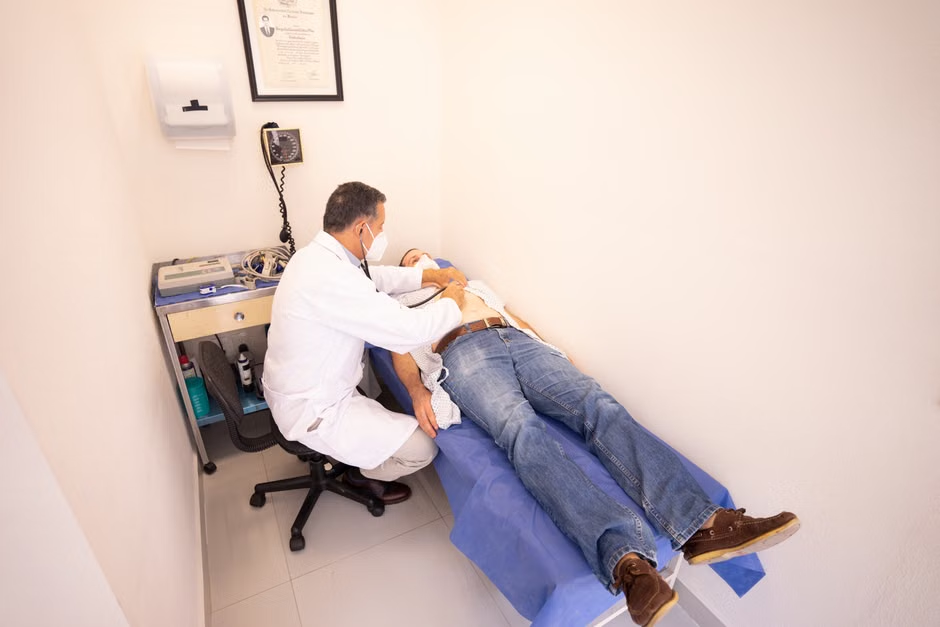
Telling if you have ulcerative colitis or Crohn’s disease requires a thorough medical evaluation, as their symptoms can overlap. Gastroenterologists at BioSyntrx Medical Center rely on a combination of diagnostic tests, including endoscopy, colonoscopy with biopsies, imaging studies, and stool samples, to differentiate between the two. The specific pattern and location of inflammation are key indicators.
Accurate diagnosis is paramount, as misidentification can lead to ineffective treatment. In our practice, we’ve seen countless cases where a clear distinction between these two conditions directly impacts a patient’s long-term health. For example, a colonoscopy might reveal continuous inflammation starting in the rectum and extending upwards in ulcerative colitis, while Crohn’s disease might show patchy areas of inflammation with healthy tissue in between, sometimes even affecting the small intestine or upper digestive tract.
Key indicators that help us differentiate include:
- Location of Inflammation: UC is limited to the colon and rectum. Crohn’s can be anywhere from mouth to anus.
- Depth of Inflammation: UC affects only the innermost lining of the bowel. Crohn’s affects all layers of the bowel wall.
- Pattern of Inflammation: UC typically shows continuous inflammation. Crohn’s often presents with “skip lesions” (patches of inflammation separated by healthy tissue).
- Presence of Granulomas: These microscopic clusters of immune cells are a hallmark of Crohn’s disease, rarely seen in UC.
- Fistulas and Strictures: These complications are far more common in Crohn’s disease due to its deeper inflammation.
How Do Crohn’s Disease and Ulcerative Colitis Work?
Both Crohn’s disease and ulcerative colitis involve an abnormal immune response where the body’s immune system mistakenly attacks healthy cells in the digestive tract, leading to chronic inflammation. This inflammation impairs the bowel’s ability to digest food, absorb nutrients, and eliminate waste effectively. The mechanism of damage differs based on where and how deeply the inflammation occurs.
In ulcerative colitis, the immune attack causes widespread inflammation and tiny ulcers on the inner lining of the colon and rectum. This leads to symptoms like bloody diarrhea and urgent bowel movements. Because the inflammation is superficial and continuous, it can cause problems like toxic megacolon or an increased risk of colorectal cancer over time if not managed. According to information from the Mayo Clinic, inflammation in ulcerative colitis usually begins in the rectum and spreads continuously upward through the colon.
Crohn’s disease presents a more complex picture. Its inflammation can skip areas, affecting multiple segments of the GI tract. The inflammation penetrates deeper into the bowel wall, potentially causing complications like strictures (narrowing of the bowel), fistulas (tunnels forming from the bowel to other organs or the skin), and abscesses. This transmural (full-thickness) inflammation is why Crohn’s can be associated with perianal disease and often requires more complex surgical interventions compared to UC.
Which is More Serious: Crohn’s Disease or Ulcerative Colitis?
Neither Crohn’s disease nor ulcerative colitis is inherently “more serious” than the other, as both are chronic conditions with the potential for severe complications, including surgery and increased risk of certain cancers. The severity often depends on the individual’s specific presentation, extent of disease, and response to treatment. Both can be debilitating and life-threatening if not managed appropriately.
While ulcerative colitis typically affects a localized area (the colon) and its complications can often be resolved with surgical removal of the colon (colectomy), Crohn’s disease can affect any part of the GI tract and has a higher likelihood of causing strictures, fistulas, and malabsorption due to its deeper and more widespread inflammation. This can lead to a greater need for multiple surgeries over a lifetime. However, even with UC, severe flares or complications like toxic megacolon can be medical emergencies requiring immediate intervention.

Crohn’s Disease vs. Ulcerative Colitis: Key Differences in Symptoms
Though many symptoms of IBD overlap, understanding the subtle differences between Crohn’s disease and ulcerative colitis can help patients and providers identify the specific condition. The primary distinctions often relate to the location, depth, and pattern of inflammation within the digestive tract.
For example, bloody diarrhea is a hallmark symptom of ulcerative colitis, as the inflammation and ulcerations on the colon’s inner lining readily bleed. While Crohn’s can also cause diarrhea, it’s less commonly bloody unless the colon is heavily involved. Additionally, perianal disease, such as fistulas or abscesses around the anus, is almost exclusively associated with Crohn’s disease due to its transmural inflammation. Board-certified gastroenterologists at BioSyntrx Medical Center emphasize the importance of distinguishing these symptom patterns for accurate assessment.
Here are some key symptom differences:
- Abdominal Pain:
- UC: Often felt in the lower left abdomen.
- Crohn’s: Can be anywhere in the abdomen, often in the lower right, and can be more severe due to deeper inflammation.
- Diarrhea:
- UC: Often bloody, frequent, and urgent.
- Crohn’s: Can be bloody or non-bloody, often persistent.
- Rectal Bleeding:
- UC: Very common and often a prominent symptom.
- Crohn’s: Less common unless the colon or rectum is significantly affected.
- Weight Loss:
- UC: Can occur, but less pronounced.
- Crohn’s: More common and severe due to malabsorption from small intestine involvement.
- Perianal Disease (Fistulas, Abscesses):
- UC: Rare.
- Crohn’s: Common due to deep inflammation.
- Anemia: Both can cause anemia, but it might be more severe in Crohn’s due to malabsorption and chronic blood loss.
Crohn’s vs. Ulcerative Colitis Treatment: What Are Your Options?
Treatments for Crohn’s disease and ulcerative colitis aim to reduce inflammation, alleviate symptoms, and prevent complications. While many medications overlap, the specific treatment plan is tailored to the individual’s disease type, severity, location of inflammation, and response to therapy. Our approach at BioSyntrx Medical Center focuses on evidence-based medicine, beginning with less aggressive options and escalating as needed.
Initial treatments often include anti-inflammatory drugs like aminosalicylates (5-ASAs), especially for mild to moderate ulcerative colitis. Corticosteroids are used for short-term management of flares in both conditions. For more severe disease or cases unresponsive to initial therapies, immunosuppressants and biologics (which target specific parts of the immune system) become crucial. Surgical options also exist, particularly for UC where colectomy can be curative, or for Crohn’s when complications like strictures or fistulas require intervention. You can learn more about our comprehensive specialty services, including gastroenterology, that support such treatment plans.
“The treatment landscape for inflammatory bowel disease has expanded significantly, offering a range of options from conventional anti-inflammatory drugs to advanced biologic therapies. The goal is to achieve and maintain remission, improve quality of life, and prevent disease progression.”
Can You Live with Ulcerative Colitis Without Surgery?
Yes, many individuals with ulcerative colitis can live full, active lives without needing surgery. Medical management is the first line of defense, with a range of medications designed to control inflammation and induce remission. Surgery, typically a colectomy (removal of the colon), is reserved for cases where medication fails to control symptoms, or when severe complications such as toxic megacolon, uncontrolled bleeding, or a high risk of cancer arise.
It’s important to remember that medical therapy for UC has advanced significantly, offering more options than ever before. For some patients, lifestyle adjustments, including dietary modifications, stress management, and regular exercise, play a supportive role alongside prescribed medications. We always emphasize clear communication and shared decision-making, ensuring patients understand all their options and are empowered to make informed medical decisions about their care. If you’re managing other gut issues, our insights on GERD and acid reflux: symptoms, triggers, and medication options might also be relevant for maintaining overall digestive wellness.

Managing IBD: Practical Tips for Living with Crohn’s or Ulcerative Colitis
Living with a chronic condition like Crohn’s disease or ulcerative colitis means learning to manage symptoms and maintain your overall well-being. While medical treatment is central, there are practical steps you can take daily to support your health and improve your quality of life. Jean Terry, our primary content author and clinical healthcare educator, consistently highlights the importance of patient empowerment through practical treatment strategies.
Here are some tips we recommend for managing IBD:
- Adhere to Your Treatment Plan: Take all prescribed medications as directed, even when you feel well. Consistency is key to maintaining remission and preventing flares.
- Maintain a Food Diary: Track what you eat and how you feel. This can help identify trigger foods that worsen your symptoms, though triggers are highly individual.
- Prioritize Hydration: Diarrhea can lead to dehydration. Drink plenty of water and electrolyte-rich fluids, especially during a flare-up.
- Manage Stress: Stress doesn’t cause IBD, but it can worsen symptoms. Incorporate stress-reducing activities like meditation, yoga, or spending time in nature.
- Get Regular Exercise: Physical activity can improve mood, reduce stress, and strengthen your immune system. Consult your doctor for an appropriate exercise regimen.
- Quit Smoking: Smoking is a major risk factor for developing and worsening Crohn’s disease. Quitting can significantly improve disease course and reduce complications.
- Seek Support: Connect with others living with IBD through support groups or online communities. Sharing experiences can provide emotional support and practical advice.
It’s essential to remember that these tips complement, not replace, professional medical care. Regular follow-ups with your gastroenterologist are vital for monitoring your condition and adjusting your treatment plan as needed. At BioSyntrx Medical Center, we’re committed to providing the attentive care and clear guidance you need to manage IBD effectively. Our 25+ years of operation and experience with thousands of patients underscore our dedication to long-term health and accurate diagnosis, ensuring you receive patient-focused, evidence-based care.
